You head downstairs for something, whatever the reason. It’s been a few weeks since you were last in the basement. As you reach the bottom of the stairs, something feels off. There’s a smell. Musty, a little stale. Not alarming at first, just noticeable.
You look around. Nothing looks wrong. Then you step forward and the carpet gives under your foot in a way it shouldn’t. It’s soft. Spongy. It’s squishy. You press your hand into it and it’s wet.
Now you’re scanning the room. The baseboards look wrong. They’re swollen at the bottom and starting to separate from the wall. You start to wonder if something has been wet here for a while.
Now the confusing part: you can’t find where it came from. The dishwasher is upstairs. It seems fine. No pipes or water lines look broken. Nothing is dripping from the ceiling. You didn’t leave a window open. There’s no visible source.
This is one of the most common calls we get. Especially in the warmer weather, after heavy rain or a quick snow melt. The culprit, more often than not, is something most homeowners don’t know or think much about until it fails. It’s the sump pump.
What Is a Sump Pump?
If your home has a basement, there’s a reasonable chance it also has a sump pump… and a reasonable chance you’ve never thought much about it.
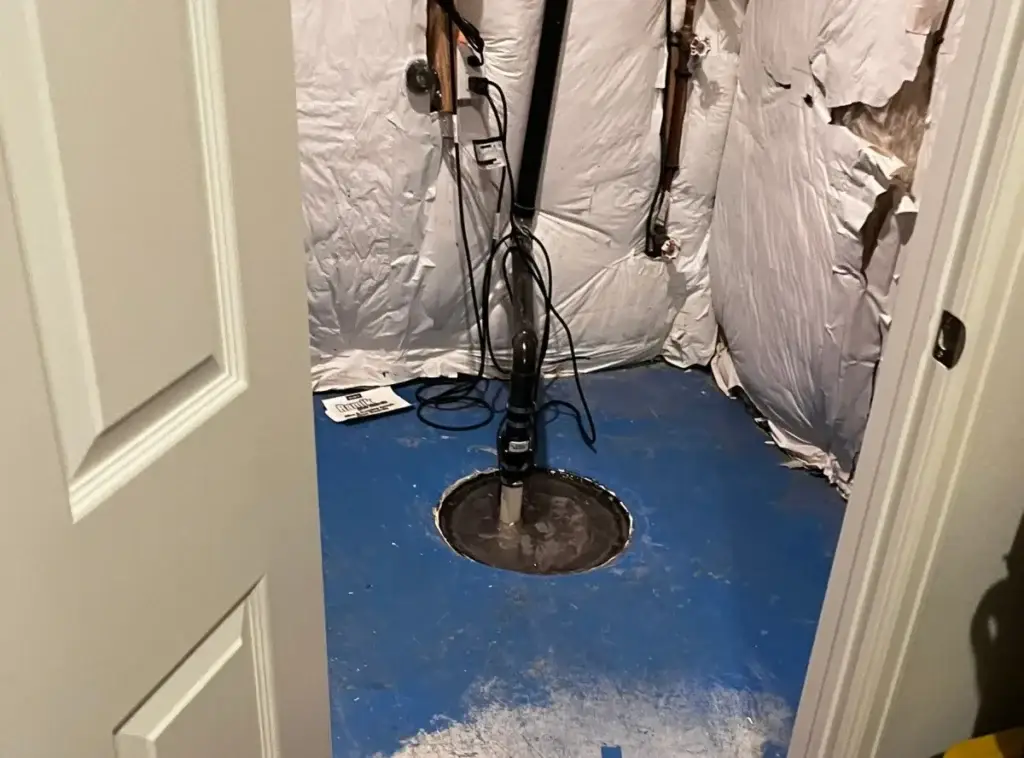
A sump pump sits in a small pit dug into the lowest point of your basement floor. As groundwater rises around your foundation or under your subfloor, from rain, snowmelt, or a high water table, it drains into that pit instead of seeping across your floor. When the water in the pit reaches a certain level, a float switch triggers the pump. The pump runs, pushes the water out through a discharge line away from your home, and shuts off.
It’s a simple system. For most homeowners it runs quietly in the background for years. Until it doesn’t.
When the pump fails, or can’t keep up with the volume of water coming in, the pit overflows and water spreads across your basement floor. Sometimes, by the time you notice it, it’s been sitting there for days.
Signs It’s Your Sump Pump that Failed
If you’ve found water in your basement with no obvious source, here’s what points toward the sump pump:
- The pit is full or overflowing. Find your sump pit. It’s usually a circular opening in the basement floor, often with a plastic lid. If it’s full of water and the pump is silent, something has gone wrong.
- The pump is running but water isn’t receding. You can hear it, but the level isn’t dropping. This points to a clogged discharge line, a failed check valve, or a burned-out impeller.
- The pump is completely silent. No sound at all. Could be a tripped breaker, a failed float switch, or the pump has simply reached the end of its life.
- No other water source in the home explains it. No pipe break, no appliance leak, no window issues. The water came up from below.
- The flooding happened during or after rain or snowmelt. Groundwater rises around your foundation during weather events. If basement water shows up after a storm and there’s no other explanation, the sump pump is worth investigating.
Now You Know the Likely Culprit. Here’s What Comes Next.
Once the sump pump is on your radar, the question shifts. Obviously you’ll have to figure out the sump pump, but the more pressing issue is the damage being caused by what’s already on your floor and in your walls.
Water from a sump pump failure is groundwater. It’s traveled through soil before it reached your basement, which puts it in a different category than a clean pipe leak. Porous materials it sat against, materials like carpet, pad, drywall, and insulation, need to be assessed, not just left to dry naturally while hoping for the best.
That’s where our Free Damage Assessment comes in. We’ll come out, identify exactly where the moisture has traveled, tell you what needs to come out and what can be saved, and walk you through your options with insurance. It’s a free assessment with no pressure.
We can also point you toward next steps on the pump itself, whether that’s a plumber, a pump replacement, or a conversation with your insurance carrier about what’s covered. We work through these situations regularly and can help you figure out who to call and in what order.
Call (303) 660-6216 any time, day or night.
What to Do Right Now
A couple of things you can do while you wait for help.
1. Move valuables out of the water. Get anything important to you out of the water. Electronics, documents, irreplaceable items, etc.
2. Document what you’re seeing. Take photos and video before anything gets moved or cleaned up. Capture the water level, affected rooms, and any visible damage to walls, flooring, baseboards, or furniture. This matters if an insurance claim comes into play later.
3. Call us, even if it’s late. Not sure if this needs attention tonight or can wait until morning? Give us a call. We can talk through what you’re seeing, help you figure out how urgent it is, and get something on the schedule. We’re available 24/7 at (303) 660-6216.
Why Sump Pumps Fail
Sump pumps can fail or stop working for a variety of reasons.
Power outages are the most common cause along Colorado’s Front Range. Summer thunderstorms knock out power precisely when groundwater levels are highest. A battery backup system is the most reliable prevention.
Mechanical failure happens to every pump eventually. Most residential sump pumps last 7-10 years. The float switch is usually the first component to fail, followed by the impeller and check valve.
Overwhelmed capacity occurs during heavy rain events or rapid snowmelt. The pump is running, but it can’t keep up with the volume of water entering the pit. This is common during spring along the Palmer Divide and in areas with clay-heavy soil that doesn’t drain well.
Frozen or blocked discharge lines prevent the pump from moving water out even when it’s running properly. In Colorado winters, the discharge line can freeze if it doesn’t have a proper outlet away from the foundation.
Clogged intake happens when debris, gravel, or sediment from the pit blocks the pump’s intake screen.
What’s Happening to Your Basement While the Water Sits
Standing water in a finished basement is doing more than getting things wet.
The first few hours: Water wicks into drywall through capillary action, pulling moisture upward into wall cavities. Carpet pad saturates quickly and traps water against the subfloor. Insulation behind walls absorbs moisture.
6-24 hours: Materials that seemed dry from the outside are now holding significant moisture. Particleboard shelving and furniture begins to swell. If the water is contaminated (which groundwater often is), any porous material it contacts needs to be evaluated for removal.
24-72 hours: With moisture content above 16% and limited airflow in enclosed wall cavities, conditions become favorable for microbial growth. This is especially true in Colorado basements, where insulation inside exterior walls traps moisture that the dry outside air can’t reach. Carpet that has sat wet can begin to delaminate.
The standing water itself is the most visible problem, but it’s the moisture that’s already traveled into your building materials that creates the longer-term issues.
Is this an emergency, or can it wait until morning?
The short answer is: it depends. It depends on how much water you have, how long the water has been there, and what the water came into contact with. Damage to building materials starts within hours, and the clock matters most in the first 24-48 hours.
This is where we can help. We’re available 24/7 and can help you think through whether it needs a same-night response or whether morning is soon enough. Sometimes the damage is done and it can wait until morning. Sometimes a more urgent response is recommended. And sometimes, it’s more about whatever helps your peace of mind.
Is This an Insurance Claim?
Sump pump failure and basement flooding fall into a complicated spot with insurance. Here’s what you need to know.
Standard homeowners insurance does not typically cover flooding from outside groundwater or rising water tables. Sometimes this is true even when a sump pump failure is the reason the water got in.
However, many policies offer a “sump pump failure” or “water backup” rider. This can be separate coverage and very common. Sometimes it can come with its own limit (often $5,000-$25,000), that specifically covers damage when your sump pump fails or a drain backs up. Your policy declarations page will tell you whether you have this rider.
If the flooding was caused by a simultaneous event (for example, a pipe burst that happened during the same storm), the pipe-related damage may be covered under your standard policy even if the groundwater flooding is not.
It’s smart to call us first. Before filing, it’s worth knowing what you actually have going on and how much it might cost. This is why many insurance agents across the Front Range send us out to look at damage before recommending filing a claim or not. A claim that gets denied, pays zero, or falls below your deductible still goes on your record and can affect your rates. We work with homeowners and insurance carriers regularly and can help you sort through what’s likely covered and how much it might cost before you decide whether to file.
When to Call a Professional vs. DIY Cleanup
If the flooding involved only a small amount of clean water on a hard-surface floor, and you can dry everything within a few hours with fans and a wet-dry vacuum, you may be able to handle it yourself.
Call a professional if any of these apply:
- Water reached finished materials (carpet, pad, drywall, baseboards)
- The water was groundwater, which is often classified as Category 2 or Category 3 (contaminated)
- Water sat for more than a few hours before you discovered it
- Multiple rooms are affected
- You’ve dried what you can but still notice dampness or smell days later
Groundwater in particular changes the equation. Water that comes up through the ground picks up bacteria, sediment, and contaminants from the soil. Porous materials exposed to contaminated water typically need to be removed, not just dried. The water needs to be decontaminated before drying can even begin.
If you’re not sure what to do give us a call. We’ll help you sort out the next best steps.
What Professional Restoration Looks Like After a Sump Pump Failure
When a restoration company responds to a sump pump failure, the process generally follows this sequence:
Water extraction. Commercial extractors and, for deeper water, sump pumps or flood pumpers remove standing water.
Assessment and moisture mapping. Technicians use moisture detection equipment to identify how far water has traveled into walls, flooring, and structural materials. This establishes the scope of work.
Equipment placement. LGR dehumidifiers, air movers, and containment barriers are set up to dry the structure. Small drill holes below or behind baseboards allow air to reach inside wall cavities.
Demo (if needed). Contaminated or unsalvageable materials are removed. If drywall needs to come out, it’s cut at 2 or 4 feet (to the center of studs) for clean reinstallation later. Of course, this only happens with your approval.
Daily monitoring. Technicians return each weekday to take moisture readings and adjust equipment. Drying typically takes 3-5 days depending on the materials and conditions.
Finalization. When all materials reach their dry standard, equipment comes out and the space is ready for reconstruction if needed.
Key Takeaways
- If you find water in your basement with no obvious source, the sump pump is the most likely culprit, especially after rain or snowmelt.
- Move valuables out of the water and document the damage before anything gets cleaned up.
- Damage to building materials starts within hours. If you find it late at night, call us and we can help you decide whether it needs a same-night response.
- Groundwater is often contaminated. Porous materials it sat against typically need removal, not just drying.
- Standard homeowners insurance usually doesn’t cover groundwater flooding from outside, but many policies have a sump pump failure or water backup rider. We can help you figure out what happened before you file.
Frequently Asked Questions
In many cases, yes. While standard homeowners insurance typically does not cover flooding from outside, many policies do cover sump pump failure. Checking your policy declarations page will tell you whether you have this rider or coverage. Regardless, it’s important to determine the source of the water before you file a claim.
Most residential sump pumps can handle 1,500 to 3,000 gallons per hour, depending on the model and the vertical distance (head height) the water needs to travel. During extreme weather events on the Front Range, groundwater volume can exceed a single pump’s capacity. A secondary pump or a higher-capacity unit can help in areas with high water tables or clay soil that doesn’t drain well.
In most cases, yes. Sump pump failure typically doesn’t create the kind of water levels that affect electrical systems or make a home unsafe to be in. If the air in the basement has a strong sewage odor, that’s a different situation and worth a call to us before spending extended time down there. If the damage turns out to be extensive enough that the home is considered unlivable, your insurance policy may include Additional Living Expenses (ALE) coverage.
What to Do Next
If your sump pump has failed and you’re dealing with a flooded basement, or if you’ve already cleaned up and want to confirm there’s nothing hiding in the walls, give us a call.
A Free Damage Assessment tells you exactly what you’re dealing with: where the moisture is, whether materials need to come out, and what your options are with insurance. No cost, no obligation.
Call (303) 660-6216 any time, day or night. Or learn more about our water damage restoration services.
Forefront Building + Restoration has been helping Colorado homeowners through water emergencies for over 20 years. IICRC-certified technicians, 24/7 emergency response, serving the entire Front Range.