It happens every year… one of those late spring storms rolls through on an otherwise beautiful afternoon. It’s crazy loud for ten minutes then it’s gone. You’re at the window watching hail build up on your patio, and the new garden you just put in your yard take a pummeling.
The next morning, you walk outside. There are leaves all over the ground from the trees. The deck railing looks like it has some dings. You look up at your roof and it looks… fine? You go about your day.
Later the doorbell rings.
A guy with a clipboard wants to talk to you about your roof. Two more clipboards are working the other side of the street. Apparently, a neighbor you’ve never met three doors down already signed something to get a new roof for free.
Now you’re wondering: this has to be a scam, right? There was a lot of hail… how do I know if I really have roof damage? And if that damage actually matters?
You’re not alone. That’s what most Colorado homeowners are trying to figure out after a significant hailstorm. Is this real? Do I honestly need a new roof? Who can I trust?
First: You Have Some Time
Of course, this goes against everything the door-knockers usually tell you.
In reality, you are not in a rush to file a claim. While waiting too long isn’t smart either, most insurance carriers give you at least a year (and often two years) after a storm date to get your roof replaced if it’s necessary. You definitely don’t have to decide on filing a claim the day after or even the week after the storm.
You also don’t want to file a claim just to see if it gets covered, which can damage your credit with insurance and affect premiums or coverage. Instead, it’s smart to schedule a Free Damage Assessment by a reputable company, first, close to the date of the hailstorm.
New hail hits are easy to identify and attribute to a specific storm. This makes the determination for a claim much easier. A reputable company will actually get on your roof and document any hail damage with photographs that can be used if you end up filing a claim. Getting an assessment done first helps you know the likelihood of your claim getting approved before you file. Get real documentation from a reputable company before you rush to file a claim.
Additionally, a roof with hail damage doesn’t typically start leaking right away. That’s actually part of the problem: the damage is real, but the consequences often don’t show up for months or even years as the exposed areas break down under Colorado’s sun and weather.
You have time to get an honest inspection, understand what you’re dealing with, and make a decision without pressure before secondary damages become an issue.
What Hail Damage Actually Looks Like
Most hail damage on a roof is invisible from the ground. This applies to you and the person holding the clipboard that knocked on your door. From the vantage point of your driveway, looking at your roof, it’s hard to genuinely know whether you have damage.
When we’re looking for damage, it shows up in a few ways, and most of them require someone on the roof to confirm.
Dark, gritty buildup in your gutters. Check your gutters and downspout areas after a storm. That sand-like material is the protective granule coating from your shingles. Some shedding is normal, especially with newer shingles. But a sudden pile-up after a storm is different. Those granules protect the asphalt layer underneath from UV and weather. Once they’re gone, the shingle ages faster.
Soft spots on the shingles. This is what the industry calls bruising. It’s what happens when hail fractures the fiberglass mat inside a shingle. The surface feels soft when you press on it, like pressing on a bruised apple. The shingle can still look perfectly normal, but the structure underneath is compromised. Hailstones generally need to be at least 1 inch in diameter, about the size of a quarter, to cause this kind of damage.
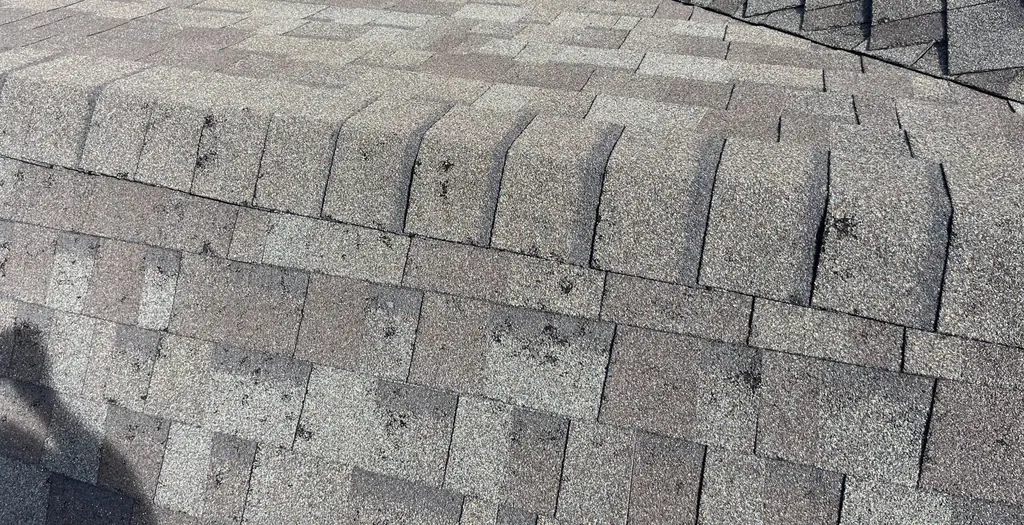
Cracks or exposed mat. In heavier storms, the impact can shatter the fiberglass mat entirely. You can see the woven material where the granules and asphalt coating have been stripped away. At that point, the shingle is no longer keeping water out. The industry calls these ‘hits’. 8-10 hits in a 10 foot by 10 foot ‘square’ of shingles is typically the threshold for insurance covering a roofing claim.
Broken adhesive seals. Each row of shingles has a self-seal strip that bonds it to the row below. Hail impact can weaken that bond. When it fails, shingles lift or curl in the next windstorm, which exposes the layers underneath to water.
Dings on metal components. Dented gutters, banged-up vents, and marks on your AC unit are also indicators of the severity of a storm. Inspectors use those softer metals as a reference point for how hard the storm actually hit. Dented aluminum doesn’t necessarily mean your roof was damaged, but it does help tell the story.
So Do You Actually Have a Problem?
Not every storm damages every roof. Hail hits differently depending on wind direction, shingle age, roof slope, and where your house sits relative to the storm’s path. Your neighbor from three doors down can get a full replacement while your roof comes through clean. That happens all the time along the Front Range during hail season (roughly late April through September).
But if damage is there, it’s not the kind of thing that stays the same. Fractured mat and missing granules mean the exposed asphalt starts breaking down under UV. A shingle rated for 30 years can fail at 15. The roof won’t leak tomorrow, but it’s aging faster than it should, and by the time the leak shows up, you may be outside the window for a claim even if it was initially caused by a hailstorm. That’s why getting an inspection after a significant storm matters.
The only way to know for sure is to have someone get on the roof and look. A legitimate inspection means boots on the roof, close-up photos of what they find, and a straight conversation about what it means.
If you want answers without having to commit to anything, that’s what our Free Damage Assessment is for. We get on the roof, document everything, and walk you through what we find. If there’s no damage, we’ll tell you. If there is, we’ll show you. No charge, no pressure. Call (303) 660-6216 or schedule online.
If it turns out you do have damage, the next decision is whether filing a claim makes sense. That depends on your deductible, your policy type, and your claim history, and it deserves more thought than a doorstep conversation. We can walk you through that too.
Frequently Asked Questions
Storm damage is any deterioration caused by a specific weather event, not general aging or wear. For hail, that means granule loss, bruising (where the fiberglass mat is fractured beneath the surface), cracked or broken shingles, and damaged adhesive seals. Wind damage includes lifted, torn, or missing shingles and damage from debris. Insurance coverage requires that the damage came from one identifiable storm. Typically, insurance is looking for 8-10 hits in a 10 foot by 10 foot ‘square’ on your roof.
You usually can’t tell from the ground, which is why a professional roof inspection matters. Gritty buildup in your gutters after a storm is an initial clue. Dents on metal components like gutters, vents, and flashing suggest hail hit your property with enough force to potentially affect your shingles. But confirming actual roof damage requires someone on the roof checking for mat bruising and hail hits. A professional inspection is the most reliable way to know where you stand, and a good one shouldn’t cost you anything.
Not sure whether your roof took damage in a recent storm? Forefront Building + Restoration’s Free Damage Assessments are straightforward: we get on the roof, document what we find, and walk you through what it means. No cost, no obligation. Call us at (303) 660-6216 or schedule online.