It happens every year. Spring shows up, the weather is gorgeous, and everyone in Colorado starts working in their yard. Between trips to Home Depot and firing up the grill, you get the hose hooked up for the first time this season so you can water the new plants you just bought. You notice you forgot to disconnect the hose from the bibb last year.
It’s probably fine.
Later that evening, you’re back inside and think to yourself, “maybe I should check the basement just to be safe”.
Apparently it wasn’t fine. The carpet is squishy, the baseboards are swollen… the hose bibb froze.
Guess it’s back to Home Depot…
What Is a Hose Bibb and How Does It Break Inside Your Wall?
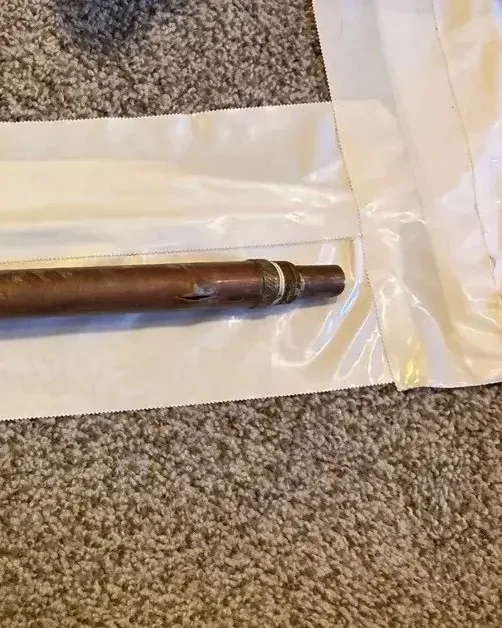
A hose bibb is your outdoor faucet. The part you see on the outside of your house is just the handle and spout. The hose bibb itself extends around 10 to 12 inches inside your wall. When the hose bibb itself freezes and cracks, the break is often inside the wall cavity and won’t leak until the hose bibb is in use again. When you start using the hose in the spring, water runs down the inside of the wall. It can soak insulation, saturate drywall from the inside out, and pool at the base of the wall before you ever see it on the surface.
Most homes along the Front Range have frost-free hose bibbs, the long-stem type designed to keep the valve seat inside the heated space. But even frost-free models can fail. If a hose was left connected over winter, the connected hose traps water in the stem, which freezes and defeats the frost-free design. This is the most common way these breaks happen in Colorado.
Signs Your Hose Bibb Broke Inside the Wall
If you’ve recently used an outdoor faucet and notice any of these, the hose bibb is worth investigating:
- Swollen or soft baseboards on the interior wall directly below the outdoor faucet. Water often runs along the foundation, missing the drywall near the faucet and pooling along the foundation. The drywall and baseboards at the base of your wall absorb the water. Baseboards are the first to show visible signs of water. They’ll swell, separate, or bubble.
- Damp carpet or flooring along that wall in the room adjacent to or under the hose bibb. Often the water runs along the subfloor and is absorbed by the carpet pad.
- Water doesn’t flow normally from the outdoor faucet. It barely trickles, or you can hear water running but nothing comes out. Water may be flowing inside the wall instead of through the spout.
- A musty smell near the exterior wall that appeared after you used the faucet. Sometimes there is little visible damage because the insulation has trapped all the moisture. This is the perfect environment for mold to begin growing.
What to Do Right Now
1. Document what you’re seeing. Photos and video of the wet areas, the wall, the baseboard, the floor. Capture where the moisture is and how far it’s spread. This matters if insurance gets involved.
2. Check anything you have sitting on the carpet for water damage. The carpet pad can act as a sponge, moving water below the carpet itself and being absorbed by anything putting pressure on the carpet and pad.
3. Give us a call. Not every hose bibb break requires mitigation or insurance involvement. Understanding the full scope of the project is important in determining your best next steps. Because water can run behind walls and under flooring, even accumulating below the subfloor in the crawl space, it’s important to get a professional inspection with moisture meters that find moisture trapped in or behind building materials to understand the full scope.
We’re happy to talk through what you’re seeing and help you figure out whether it needs immediate attention or can wait until we get out there for a Free Damage Assessment. We respond 24/7 at (303) 660-6216.
We can also help you coordinate a plumber for the hose bibb repair itself. We work through these situations regularly and can help you figure out who to call and in what order, so you’re not making separate calls trying to sort it out.
Why Hose Bibb Breaks Are Deceptive
The visible damage from a hose bibb break almost never tells the whole story. Here’s why.
The water enters the wall cavity near the top (where the bibb penetrates the exterior wall) and runs downward. Along the way, it soaks into fiberglass insulation, which absorbs water like a sponge and holds onto it. The insulation doesn’t have airflow inside that wall cavity, so it doesn’t dry. It just sits there, wet, pressing against the back side of your drywall and the wood framing.
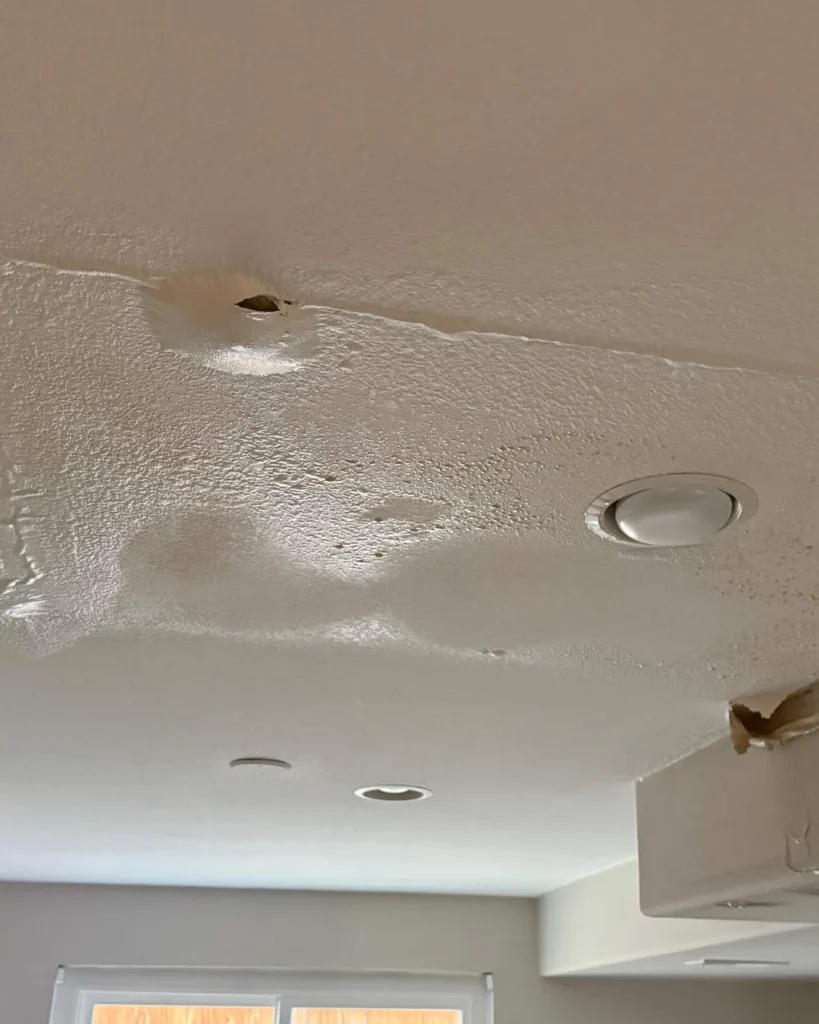
Meanwhile, the front side of the drywall can look completely fine. Water running down the back doesn’t always show through to the painted surface right away. By the time you see discoloration or bubbling, the moisture has usually been there for a while.
And because the water runs down to the base of the wall, it spreads along the bottom sill plate and into the subfloor. If you have carpet, the pad absorbs it and distributes it outward, sometimes well beyond the wall where the break occurred. With pet barrier carpet pad, the water is actually trapped below the carpet. If you have wood, LVP, or even tile, the same thing can happen and not show signs of water absorption immediately. The damage can extend into an adjacent room through the subfloor before you ever see a sign of it on the surface.
This is the main reason a professional moisture inspection matters. Moisture meters can read through walls and identify exactly where the water traveled, including areas that look completely normal from the outside. That’s what our Free Damage Assessment is for.
Is This Clean Water or Contaminated Water?
If there’s a silver lining to a hose bibb break, this is it.
Hose bibb water is supply line water. It’s the same water that comes out of your kitchen faucet. In the restoration industry, this is classified as Category 1, meaning it’s clean and doesn’t pose a health risk on its own.
That’s a better starting point than a sump pump failure (where groundwater picks up contaminants from the soil) or a sewage backup. It means more of your materials can potentially be saved if the water is addressed quickly.
The catch: clean water doesn’t stay clean indefinitely. If it sits in contact with building materials for more than a day or two, or if it picks up dirt, animal feces, insulation fibers, or organic material from inside the wall cavity, it can deteriorate to Category 2 or 3 (contaminated). At that point, the approach to cleanup changes and more material may need to come out.
The sooner we can assess it, the more options you’ll have. Early response with a hose bibb break can be the difference between drying the wall in place and having to tear it out.
Is This Covered by Insurance?
Hose bibb failures are one of the more straightforward insurance claims, because the cause is clear: a pipe froze and cracked.
Most standard homeowners policies cover sudden and accidental water damage from plumbing failures. A frozen hose bibb is a supply line failure, and that typically qualifies. Unlike groundwater flooding (which is usually excluded), a broken pipe is a covered peril under most policies.
A couple of things to know:
Insurance covers the water damage, not the faucet itself. The plumber who replaces the hose bibb is a separate cost. What insurance covers is what the water did to your home: drying, removing damaged materials, and putting things back together.
The “gradual vs. sudden” question. If a carrier determines the hose bibb has been slowly leaking for weeks or months (a pinhole drip rather than a freeze crack), they may treat it as a maintenance issue rather than a sudden event. A crack from freezing that shows up the first time you use the faucet in spring is typically straightforward. That’s a sudden event with a clear cause and a clear timeline.
Responsible response. Responding to the damage quickly is important when it comes to insurance. If the water damage was discovered in the spring but isn’t dealt with until the fall, secondary damages like mold can occur, and the risk of losing the claim increases.
Before you file, it’s worth knowing what you’re dealing with. We can come out, assess the scope of the damage, and give you a sense of what it would cost. That way you’re making the insurance decision with real information, not a guess. A claim that gets denied or falls below your deductible still goes on your record and can affect your rates down the road. This is a conversation we have with homeowners regularly, and it’s always free.
Call us at (303) 660-6216 to talk through your situation.
What to Expect from Professional Restoration
If you do need professional help, here’s what the process looks like so there aren’t any surprises.
First, we figure out where the water went. We use moisture detection equipment to map the full extent of the damage. With a hose bibb break, the water path is usually from the bibb location down the wall cavity, along the bottom plate, and into the subfloor and adjacent flooring. We need to know exactly how far it traveled before we can determine what needs to happen.
Then we extract what we can. If water has pooled at the base of the wall or soaked into the carpet pad, commercial extractors pull it out. We may remove baseboards to access the base of the wall cavity where water tends to collect.
If materials are too saturated to dry in place, we remove them. Insulation that’s been soaking inside a wall cavity should come out. If the drywall is damaged or needs to be removed to get to the insulation, we cut it at clean intervals (typically 2 or 4 feet, at the center of studs) so it reinstalls cleanly later. If you have pet barrier carpet pad or water-resistant flooring, it actually works against you in this situation, trapping the moisture, and likely should be removed. Nothing gets removed without your knowledge and approval first.
Then we dry the structure. Dehumidifiers and air movers run for several days. Small drill holes below or behind baseboards let air reach inside wall cavities where moisture is trapped. Technicians check moisture levels regularly and adjust the equipment as things dry. When materials reach their dry standard (the moisture content they were at before the event), we remove the equipment.
Once it’s dry, the space is ready for reconstruction if materials were removed. New insulation, drywall, paint, baseboards, carpet, whatever needs to go back.
For a hose bibb break that’s caught the same day, many of these losses are on the smaller side. The break is typically localized to one wall cavity, and the damage stays fairly contained. Catch it early, and the scope stays manageable.
Preventing This Next Year
The good news is this one is very preventable.
Disconnect your hoses before the first freeze. This is the big one. A connected hose traps water in the stem of the hose bibb, which freezes and defeats the frost-free design. If you only remember one thing from this post, make it this.
In the spring, test before you trust. Before you connect a hose and walk away, open the faucet and let it run for a minute. While it’s running, go inside and check the wall behind it for any signs of moisture. A 60-second check before each first use of the season can catch a break before it turns into a project.
Key Takeaways
- If you just used an outdoor faucet for the first time this year and notice moisture inside your house below it, the hose bibb is the likely culprit.
- The visible damage is almost always less than what’s happening inside the wall. Insulation traps the moisture, and the carpet pad spreads it further than you’d expect.
- Hose bibb water is typically clean (Category 1), which means more materials can often be saved if you catch it early.
- Insurance usually covers this if you respond timely. It’s a sudden pipe failure, and most policies cover the damage to your home. We can help you assess the scope and think through the decision before you file.
- Disconnect your hoses before winter. Seriously. It’s the single most effective thing you can do.
Frequently Asked Questions
In most cases, yes. A frozen hose bibb that cracks is a sudden plumbing failure, and most homeowners policies cover the resulting water damage if responded to in a timely manner. The policy covers what the water did to your home, not the faucet replacement. If the leak was gradual rather than sudden, coverage can be more complicated. We can help you assess the situation and think through the decision before you file.
The biggest tell is moisture or swollen baseboards on the interior wall directly behind the outdoor faucet. Water from a broken hose bibb runs down inside the wall cavity and pools at the base, so the baseboards and lower drywall are usually the first to show damage. If you turn on the outdoor faucet and the water barely trickles or doesn’t come out, but you can hear it running, water may be flowing inside the wall instead of through the spout.
If there’s insulation in that wall (and most exterior walls in Colorado have it), probably not. The insulation absorbs the water and holds it. Without airflow and dehumidification inside the wall cavity, the materials stay wet long enough for mold to start growing. A moisture assessment can tell you whether the wall is actually drying or just looks dry from the outside.
Damage to building materials starts within hours. Drywall wicks moisture upward, insulation absorbs water, and carpet pad distributes it along the subfloor. Within a day or two, conditions inside an enclosed wall cavity can become favorable for microbial growth. A hose bibb break caught the same day is usually a smaller, more contained loss. One that ran for hours while you were at work is a different scope entirely.
What to Do Next
If your hose bibb broke and water got inside the wall, or if you used the outdoor faucet and something doesn’t seem right, give us a call.
A Free Damage Assessment tells you what you’re actually dealing with: where the moisture went, whether materials need to come out, and what your options are with insurance. No cost, no pressure.
Call (303) 660-6216 any time, day or night. Or learn more about our water damage restoration services.
Forefront Building + Restoration has been helping Colorado homeowners through water emergencies for over 20 years. IICRC-certified technicians, 24/7 emergency response, serving the entire Front Range.