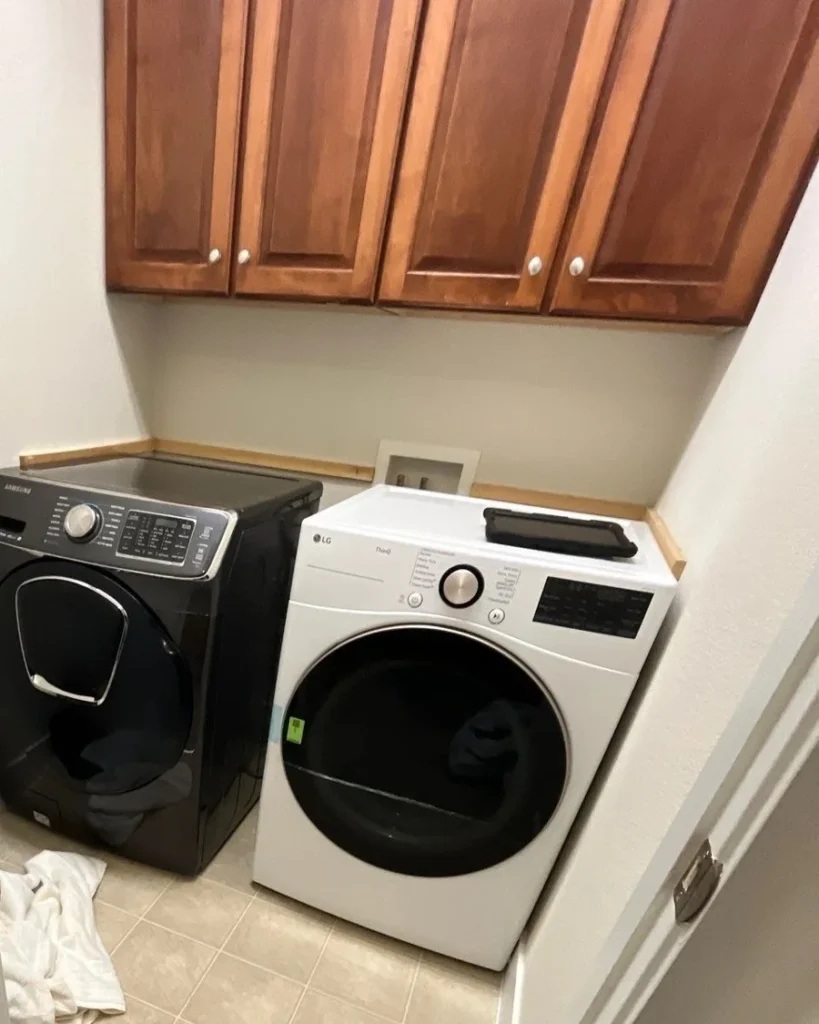
You turn the corner to find the laundry room floor covered in water. Did the washing machine break? Did it overflow? Who knows? For now, you’ve got to get this cleaned up before it does damage. You get towels down, and you get most of it up. Now you’re looking at the floor and it looks fine.
Are you done? Is everything fine? Are you supposed to call somebody?
Sometimes all it takes is wiping up the floor. Sometimes it’s a little more serious. There are a few factors that come into play: how much water was on the floor, for how long, and what the floor is made of.
When Cleaning It Up Is Enough
A small overflow that stayed on a non-porous surface like tile and got wiped up relatively quickly is a safe bet. Not every spill needs a water damage restoration company, and plenty of them are exactly what they look like.
The two things that push it past that: how far it spread, and what it reached on the way. Did it touch the baseboards? (Do you see any bubbling on the baseboards?) Did it touch carpet? If not, you’re more likely okay. Obviously, a gallon around the base of the machine is a different situation than a full tub across the room and out the doorway.
How Would You Know If It Got Somewhere Worse?
In short, when the water reaches something absorbent or ran underneath something.
- Carpet and pad. When water reaches the carpet, it can absorb into the pad and spread out, often beyond what you can see on top of the carpet. It can’t always be dried quick enough to prevent mold on the subfloor. Pad saturates fast and might be worth assessing.
- Baseboards, drywall, and anything that ran under a cabinet toe kick. Absorbent and closed in, which is the combination that doesn’t dry on its own. Check the vanity for signs of bubbling or water absorption.
- The subfloor, if enough water sat on the tile. The tile itself may dry quickly but grout is porous. A full washing machine’s worth of water sitting on tile can get through to the subfloor underneath. It’s less of an issue if the tile is on cement.
- Wood floors. A significant amount of water on a wood floor quickly becomes an issue. Water can get between the planks and absorb into the wood, causing buckling over the next 24 to 48 hours and beyond.
You might expect a wood floor to react right away, and it can take 24 hours or more before the boards start lifting at the edges after water gets dropped on them. A floor that looks fine two hours in may not have told you much yet.
These situations don’t always show on the surface, which is how you can mop a floor dry and still have a wet structure that later results in a buckled floor or microbial growth. Drywall and subfloor can read dry to your hand and wet to a meter, which is why we use them.
What to Do Right Now
Give us a call and describe what happened. You can even send a few photos. Often, we can sort it out right there, without anyone coming out.
If you’d rather have eyes on it, we’re happy to do a free damage assessment in person, with no obligation attached. If we get there and everything’s dry, you can rest easy. You found out your house is fine, and it cost you nothing to know.
Call (303) 660-6216 any time.
Key Takeaways
- What decides it is how much water there was, how long it sat, and what the floor is made of.
- Non-porous surface, cleaned up within a couple of hours: you’re probably done.
- Carpet and pad, baseboards, drywall, grout, under a cabinet: cleaning from the top doesn’t reach it.
- Bubbling on the baseboards or around the vanity is the check you can do yourself.
- A wood floor can take 24 hours or more to start lifting at the edges, so “it looks fine” isn’t proof yet.
- A phone call or a few photos settles it, and finding nothing is a real result.
Frequently Asked Questions
Typically this would be covered. However, not every water loss is worth a claim. Cost and claim history are important things to consider. Filing a claim might be worth considering but the first step is to get as much information as you can.
If it was a small amount and you got it up quickly, probably not. If your tile is on cement, you’re likely fine. Tile itself isn’t what you’re worried about. It’s if water had a chance to get absorbed through the grout. This depends on how much there was and how long it sat. If you’re unsure, it’s a two-minute phone call and we can help.
Wet materials can start growing mold in 24 to 48 hours, even in Colorado, so the useful window is short. That’s the reason to sort it out today rather than next week, and it’s true whether or not this turns into an insurance claim. Dealing with the water and deciding about insurance are two separate questions.