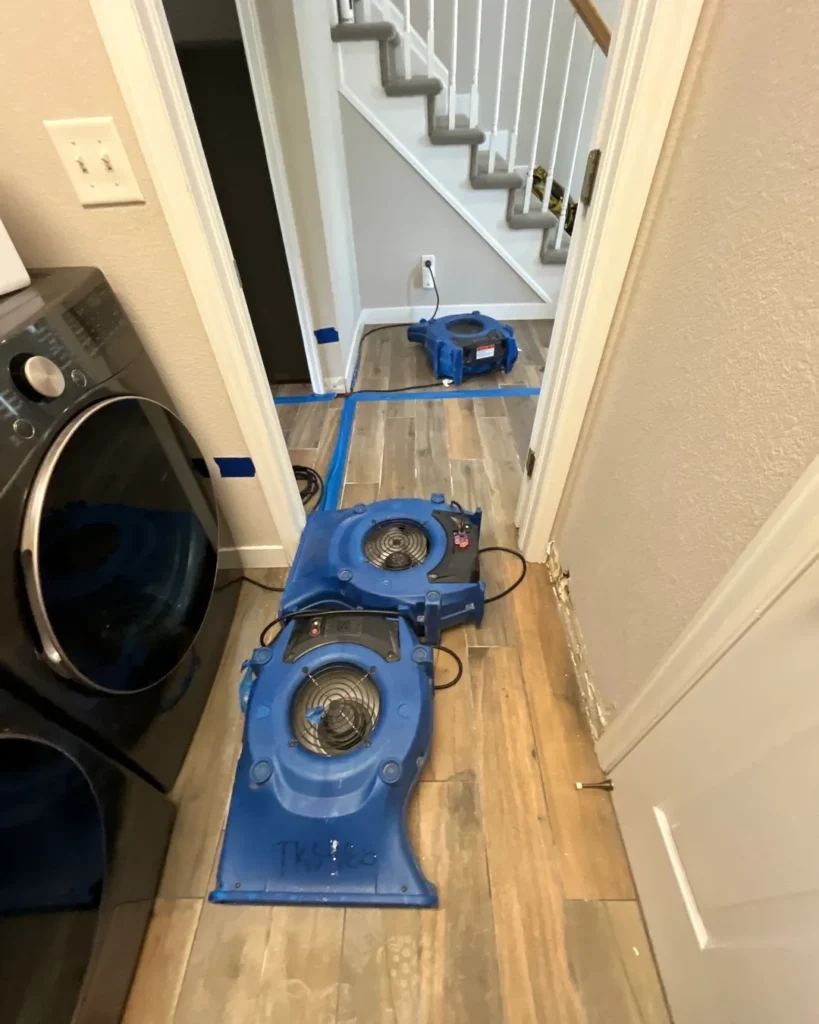
The installers left about an hour ago. You got your new washer, finally! You run a load or two and come back to find water across the laundry room floor, heading for the hallway.
A brand-new washing machine leaking right after install is frustrating, especially when it’s not your fault. And it’s definitely not something you should have to pay for.
This is a different sinking feeling than a supply line that gave out after fifteen years. That one is bad luck. This one was somebody’s job.
Unfortunately, this is fairly common. The first reaction is less of a question and more of a statement. “This isn’t my fault. I’m not paying for it.”
You’re Not Wrong. So What’s Next?
You’re right. If the installers are responsible for the flood, they should be the ones to pay.
At the same time, you not only have a say in who does the work but you have a vested interest in making sure the work is done correctly and to industry standards. It’s important to make sure your property is dry, gets dry, or is put back to pre-loss condition.
We’ve worked with big box stores many times over the years (Home Depot, Lowe’s, etc.) as well as smaller outfits. Of course, let whoever installed it know there’s an issue. At the same time, don’t wait to get mitigation or a Free Damage Assessment going. Just make sure to let us know the situation so we can prepare to work with the responsible party.
Should I File My Own Claim?
You can, but it might be worth avoiding.
Filing your own claim gives you direct control, especially over the project’s pace when reconstruction is needed. Your insurance carrier will likely subrogate against the installer’s insurer to recover what it paid, which is usually how you get your deductible back. Filing your own policy still records the loss on your history either way, which is the reason to weigh the installer’s coverage first.
Going through your installer’s insurance slows things down somewhat, but eliminates the risk of anything impacting your insurance in the long term.
We work on liability claims like this all the time, and can help advocate for you in getting the project done through the installer’s carrier.
Either way, the water damage restoration part of this is ordinary, as is handling the communication with insurance, and we deal with it every week.
You Still Pick Who Fixes Your House
In Colorado you have the right to choose your own restoration company.
That’s true on your own claim, and it’s true when someone else’s insurance is paying the bill. When making a decision to protect or restore your property, it’s important that you feel comfortable with the company doing the work.
If you decide to let the installer or their carrier arrange the repair, ensure you are comfortable with the company and verify whether they are protecting your interests or those of the people referring them.
As for Forefront Building + Restoration, we’ve chosen not to sign contracts with insurance carriers and instead work directly with the home and property owners we live near and share life with. Just because we’ve decided not to be on a preferred vendor program list doesn’t mean that it will be more difficult for us to work with insurance. On the contrary, it makes it even more important for us to make sure things go smoothly for you when you have a water loss, regardless of your carrier. Our reputation with you matters!
What to Do Right Now
Give us a call and describe what happened. Make sure to let us know it was a new install someone else performed.
We can often sort out the scope over the phone or from a few photos. If you’d rather have eyes on it, the assessment is free and there’s no obligation attached.
Call (303) 660-6216 any time.
Key Takeaways
- When the install caused the leak, the installer’s insurance is in play, not just yours, and choosing between them is the real decision.
- Filing on your own policy gives you control, but it records a loss you didn’t cause, so it’s worth weighing the installer’s coverage first.
- The installer’s liability coverage exists for exactly this, so ask about it before you default.
- You choose your restoration company even when someone else’s insurance is paying.
- We work directly with the installer’s carrier so you’re not the middleman.
- Say “it was a new install” when you call. It changes what we look at and how we document it.
- Let the installer know there’s an issue, but don’t wait on that to get mitigation or a free assessment going. Drying the house shouldn’t wait on the claim.
Frequently Asked Questions
It can be either, and that’s the decision worth slowing down for. You can file on your own homeowners policy like any sudden water loss, or pursue the installer’s liability coverage because the damage came out of their work. Filing your own still records the loss on your history even though you didn’t cause it, so it’s worth weighing the installer’s coverage first. Call us and describe what happened.
No. In Colorado you have the right to choose your own restoration company, and that right doesn’t go away because someone else’s insurance is paying. If a company shows up that you didn’t pick, you can say no.
Yes, and it’s the first thing to say when you call. A brand-new appliance leaking points at the installation rather than wear, which is what opens the liability question. It changes who might pay, so it changes what we look at and how we document it.
No. The water keeps doing damage while the insurance gets sorted, so don’t wait. Let whoever installed it know there’s an issue, and at the same time get mitigation or a Free Damage Assessment going. Drying the house out and working out whose claim it is are two different clocks, and only one of them can wait. We can also help with the conversation with the installer or their carrier, so you’re not navigating it alone.