24/7 Water Damage Response

Water Damage Restoration in Colorado Springs

We handle water damage across Colorado Springs and the Pikes Peak region, from the first emergency extraction through drying and, if it comes to it, the rebuild. One company, start to finish.

Is This Something Forefront Can Handle?

Water damage isn’t always dramatic. Sometimes it’s an everyday thing that broke at the wrong time, sometimes it’s a true emergency. We handle all of it.

Supply line breaks

The little lines feeding your fridge, dishwasher, toilet, or a sink. Easy to forget about until one fails and runs for hours.

Frozen and burst pipes

A hard cold snap, a pipe in an exterior wall or an unheated space, and a crack that lets go when things thaw.

Sewage backups and overflows

The worst category to deal with, and not one to clean up yourself. Contaminated water changes what can be saved and what has to come out.

Sprinkler line breaks

Usually in spring, when irrigation systems come back on and a line that cracked over winter finally meets pressure.

Sump pump failures

The pump that keeps your basement dry quits, and the pit overflows across the floor. What to do when a sump pump fails →

"I don't know where it's coming from"

A soft spot in the floor, a stain on the ceiling, a musty smell with no obvious source. Something’s wet and you can’t find why.
If you’re looking at one of these right now, you don’t have to sort out the cause before you call. We can often help you narrow it down over the phone. (303) 660-6216

The Damage You Can't See

The water you can see is rarely the whole story. Water travels. It wicks up into drywall, soaks into carpet pad, saturates the insulation inside wall cavities, and collects behind baseboards. The surface can feel dry while the materials behind it stay wet for weeks.
That hidden moisture is where the real trouble starts. Above about 16% moisture content, with limited airflow inside a wall, conditions turn favorable for mold, often within a couple of days.
Colorado’s dry climate doesn’t protect you here, it works against you. When you assume it’ll just dry out on its own, the water trapped behind a baseboard or under the pad never gets the airflow it needs. We do as much mold work as water work, and a lot of it traces back to a water problem someone thought had dried out. If you’ve already mopped up the visible water and you’re wondering whether that was enough, that’s a fair question, and a Free Damage Assessment can answer it.
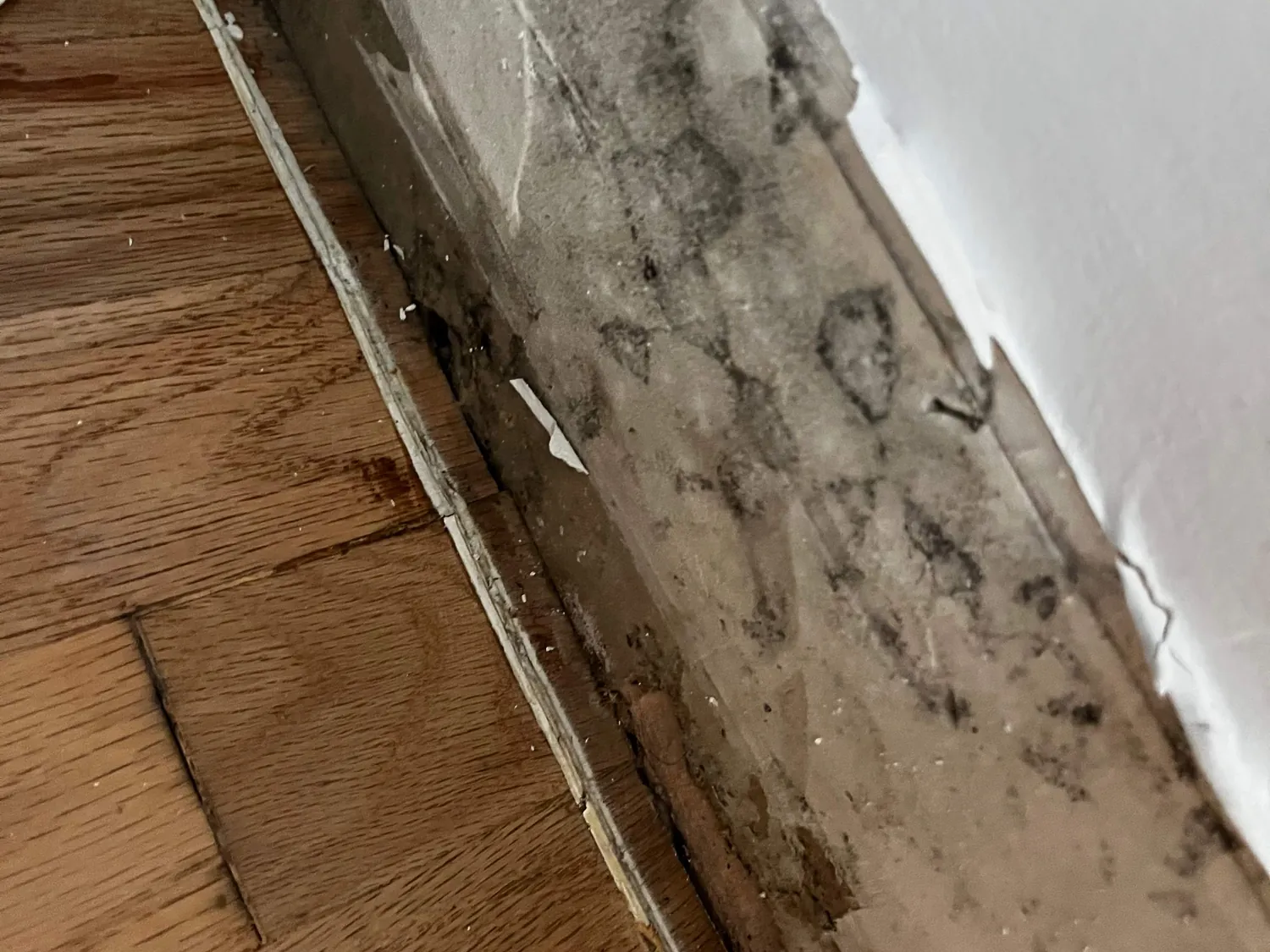
Black mold growth revealed on a wall from hidden water damage
Vaulted great room stripped to wood framing and rafters during reconstruction

Extract, Dry, & Rebuild

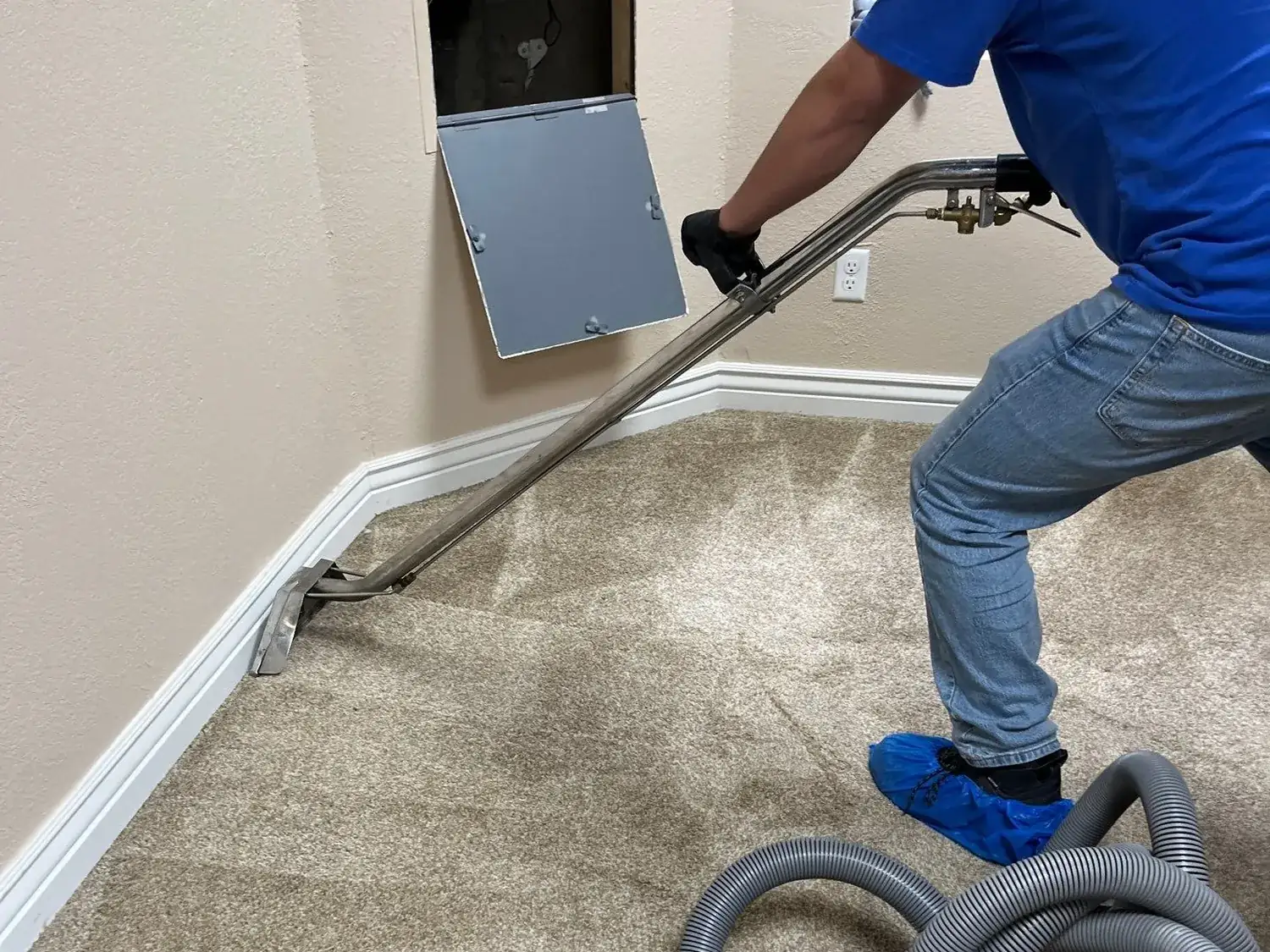
We get there and stabilize the situation first, extracting standing water and setting drying equipment so the damage stops spreading. We map the moisture with meters so we know how far the water actually traveled, not just where it’s visible. If materials are too far gone or won’t dry in a reasonable timeframe, we remove them, and we always walk you through what we’d recommend pulling out and why before anything comes out.
Then we dry the structure properly and track it with moisture readings until everything hits its dry standard. If there’s rebuilding to do, the same company that dried your home puts it back together. No handing you off to a separate contractor, no re-explaining your situation to someone new.

Is a Claim the Best Option for Me?

Not every water problem belongs on an insurance claim. Some are close to or below a deductible, and a claim that gets denied or pays out nothing still shows up on your record and can affect your rates later.
We’ve worked with insurance for two decades, and we’d rather help you figure out whether filing makes sense than push you toward it. A Free Damage Assessment gives you a real read on the scope and what it’s likely to cost, so you can make that call with actual information. If you do file, we handle the documentation and coordinate with your adjuster. More on how that works on our water damage page.
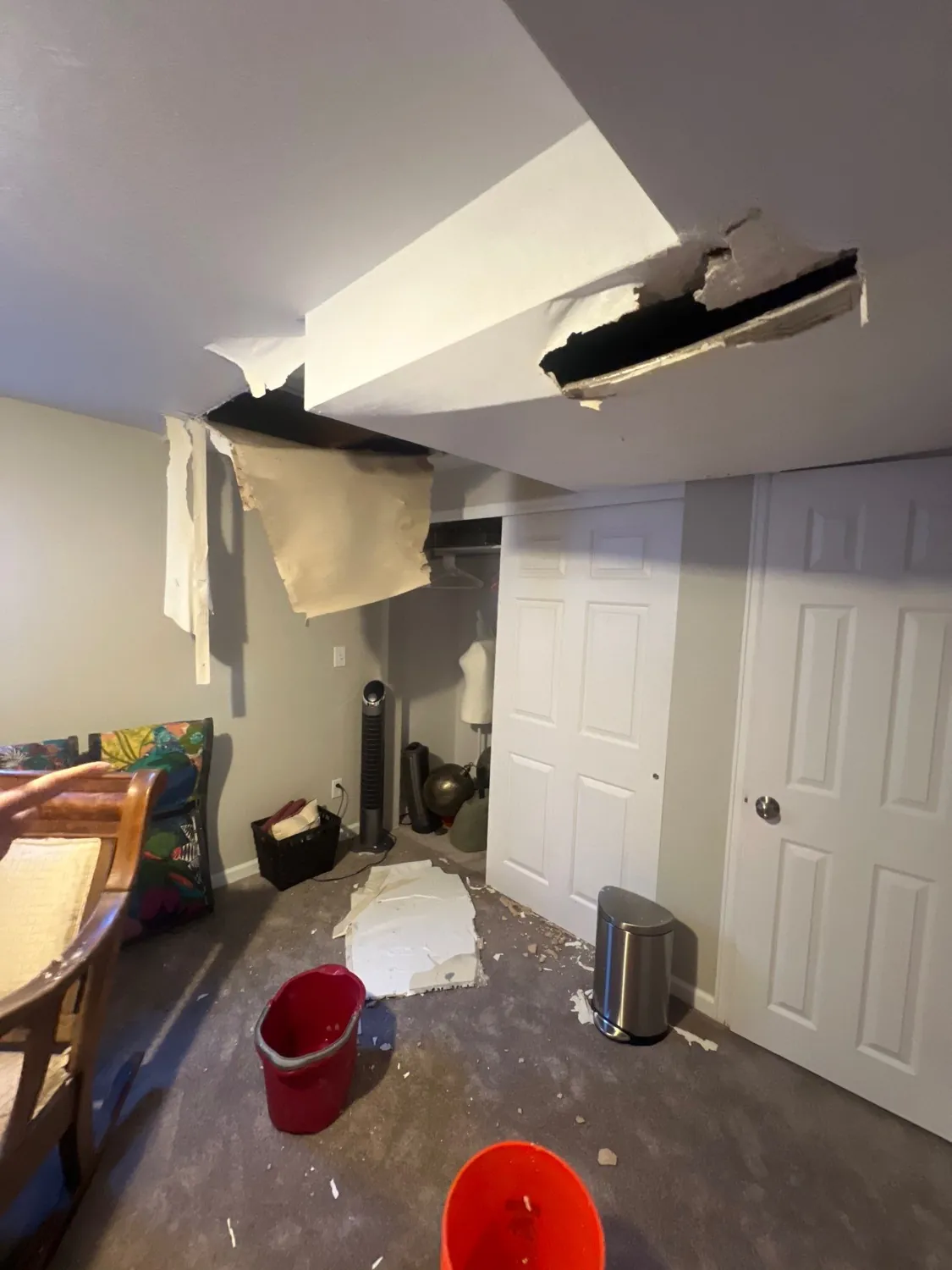
Ceiling collapsed and drywall fallen from water damage, debris and buckets on the floor

When You Can Handle It, and When to Call

If a small amount of clean water sat on a hard surface and you can dry it fully within a few hours with a wet vac and fans, you may be fine on your own. That’s a real answer, not a setup.
When you’re not sure which side of that line you’re on, call us. We can often tell from a few photos or a quick conversation. (303) 660-6216

It's worth a Free Damage Assessment when:

  • Water reached carpet, pad, drywall, or baseboards
  • The water was contaminated (sewage, or it sat long enough to turn)
  • It sat for more than a few hours before you found it
  • More than one room is affected
  • You've dried what you can but still smell or feel dampness days later

Serving Colorado Springs and the Pikes Peak Region

We cover Colorado Springs and the surrounding area. If you’re nearby and not sure whether we reach you, just ask.
Colorado SpringsBriargateBlack ForestThe BroadmoorOld Colorado CityManitou SpringsMonumentFalconSecurity-WidefieldFountainPowers Corridor

Frequently Asked Questions

For active water emergencies, we move quickly to get a crew on-site for extraction and stabilization. The sooner standing water is out and drying starts, the less it spreads into materials you’d rather not lose. If you’re not sure whether your situation is an emergency or something that can wait until morning, call us and we’ll help you figure that out. We’re available 24/7 at (303) 660-6216.
Most policies cover sudden, accidental water damage, like a burst pipe or an appliance line that failed, while slow leaks and outside ground water are treated differently. Coverage comes down to the cause and your specific policy. We’re not your carrier and can’t guarantee what’s covered, but after 20 years working with insurance we can help you understand what you’re likely dealing with before you file. Often it’s worth a Free Damage Assessment first, so you’re not filing a claim you didn’t need.
Sometimes, if the water was clean and stayed on a hard surface you can fully dry within a few hours. The concern is water that reached carpet, pad, drywall, or the inside of a wall. Household fans and a shop vac can’t match what professional drying does, and they tend to miss the moisture trapped where you can’t see it. If you’re not sure whether the water got into anything it shouldn’t have, we can help you figure that out before it turns into a bigger problem.
Yes, and the dry climate is part of why. When water gets trapped behind a baseboard or under carpet pad, the dry air in the rest of the house never reaches it, so it sits wet long enough for mold to start. We see it constantly. The fix is making sure the materials actually dried, not just the surface, which is exactly what moisture readings during professional drying confirm.

Not Sure What Comes Next?

That’s where most people are when they call. Start with a conversation. We’ll walk through what you’re dealing with and lay out your options, including whether it’s something you can handle on your own. No pressure, no cost.