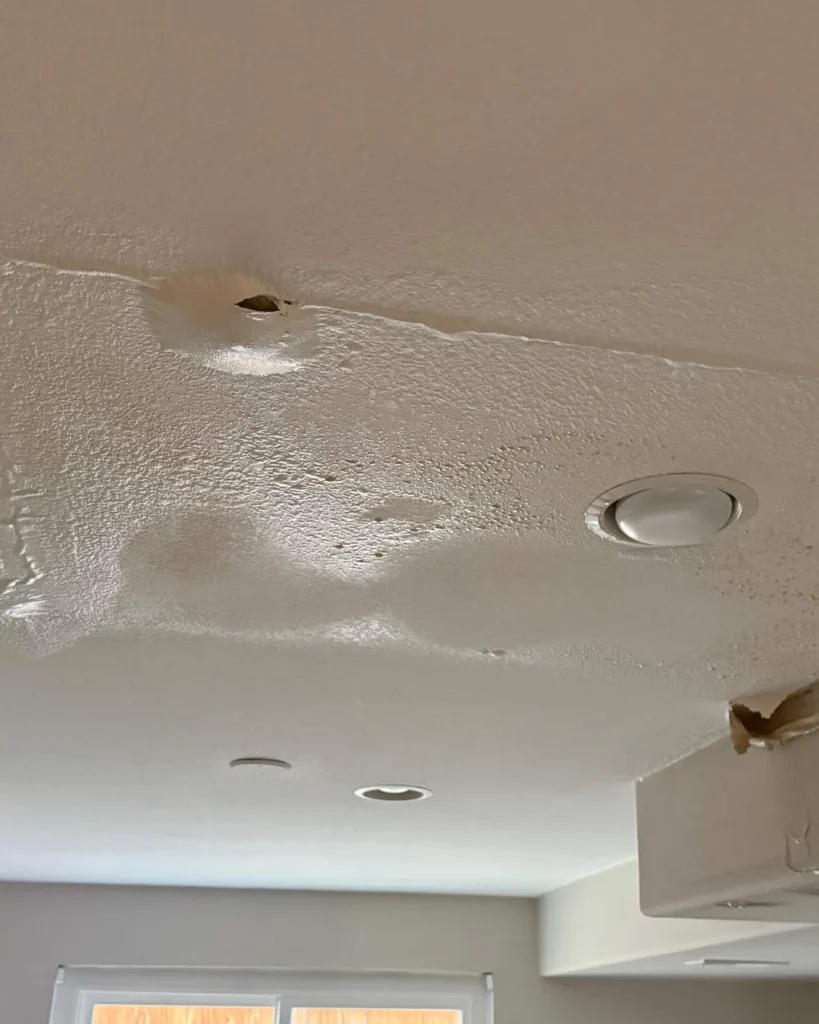
A sagging ceiling is obviously a problem. What makes it worse is when you don’t know what the cause is.
We see a variety of things behind sagging ceilings, including:
- A water line that finally failed, typically at a joint under the floor or in the wall
- A sewer line that disconnects or breaks underneath a shower or a bathtub
- Maybe the sneakiest one: a faucet that fails inside the wall, like in a shower or bathtub, that only leaks when the faucet turns on
In these situations, we have two issues:
- How do we fix the damage?
- How do we stop it from occurring?
Should you pop the bubble?
If you have a sense of where the water’s coming from, and that the water is likely from a clean source, yes, it’s okay to pop the bubble if you want. Just keep in mind that it’s likely going to release water, so be prepared with a bucket underneath or something to clean up the mess that likely is to ensue.
Keep in mind that the drywall is already damaged, so releasing the pressure and giving the water an outlet can help. It might prevent further sagging or slow down the possibility of microbial growth.
An exception is if you suspect the bubble is caused by sewage (if it happens to be right under a toilet, for example); in that case, having professionals involved can protect your health as well as prevent further damage to the property.
If you’re handy, taking the damaged section down by cutting a small inspection cut is also a reasonable move. Opening the drywall exposes the framing, and exposed framing dries a lot better than framing sealed behind wet drywall.
If you’d rather not deal with it yourself, that’s fine too. Have us come out and do a free damage assessment, and we’re happy to help in whatever way we can.
What the Sag Is Actually Telling You
Drywall holds a surprising amount of water before it visibly sags. By the time you can see it hanging, a fair amount of water has likely accumulated.
While the damage is concerning, figuring out where it came from is equally as important. Was it from a nearby fixture, a supply line, or a drain above? Did it run along the drywall, collecting at the low point where you’re now seeing the sagging?
The ceiling is the end of the story, not the beginning. The water damage restoration question has two important parts: how do we deal with the impact of the water, and how did the water get there?
Keep in mind that enough water to sag a ceiling is usually enough to affect the framing or subfloor above it. Not properly dealt with, this creates an ideal environment to grow mold, and is why it might be worth having a professional look at it.
Why the Framing Matters Just as Much as the Ceiling
Removing the damaged drywall, in large part, fixes that specific issue. It’s the framing that’s still wet that may later on become a significant problem.
The framing and subfloor are enclosed. The wood dries slowly once it’s saturated. Left alone, saturated framing in an enclosed area creates an ideal environment for microbial growth to occur.
An assessment answers that. We check moisture in the structure above the ceiling and tell you whether this is a patch or something that needs a little more help. Sometimes the best move is to cut an inspection hole and see what’s actually happening. It often helps identify the source, so the problem can be permanently fixed.
The Electrical Question
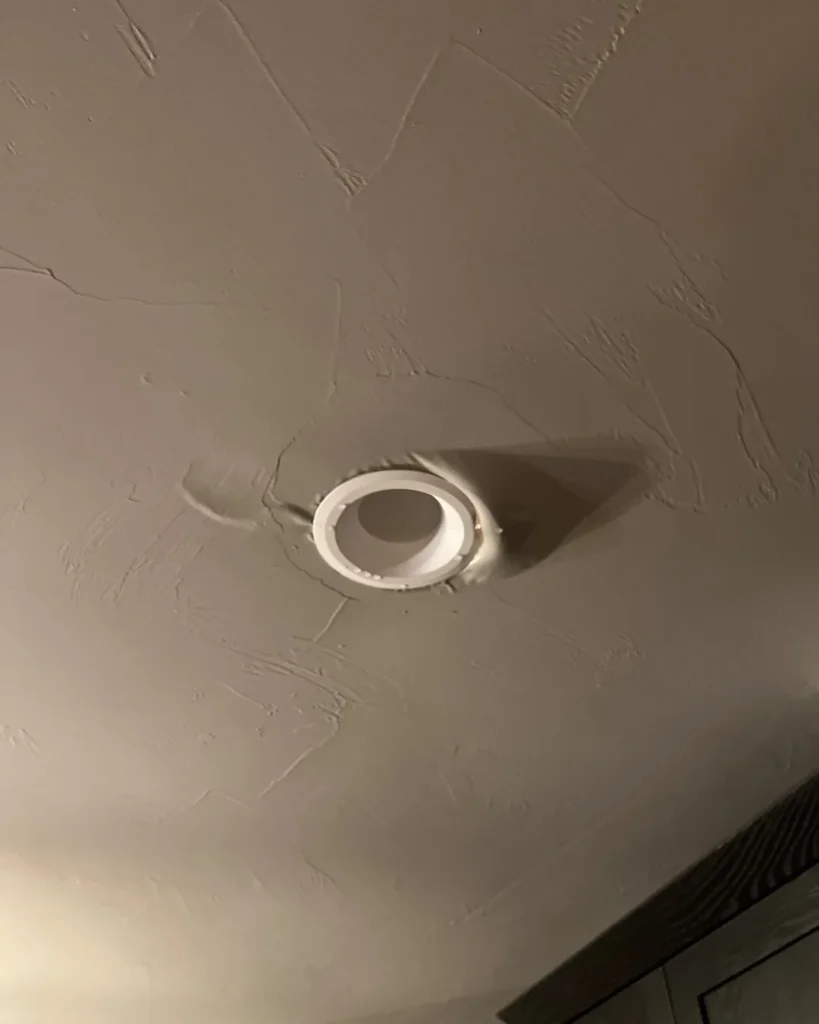
Water dripping from a can light is something we see regularly. It doesn’t mean the house is unsafe and it isn’t necessarily the emergency you might assume when you see it. Just leave the light off until a professional assessment can be done.
If there is significant water on the floor to the point where it is reaching outlets, or streaming down into an electrical box, that’s a little different. These situations can become more serious and escalate quickly. If this is what you’re seeing, stay out of the area and get a professional assessment going.
If you’re unsure, give us a call and we’ll talk you through it.
What to Do Right Now
If it makes you feel better, you can pop the bubble, catch the water, pull the damaged piece of drywall. If you’d rather leave it to us, that’s fine too. The bottom line is that a bubble in a ceiling isn’t necessarily an emergency.
Give us a call, describe what you’re seeing, and we’ll help you sort out the next step.
We’re happy to put eyes on it, too. Our in-person assessment is free with no obligation.
Call (303) 660-6216 any time.
Key Takeaways
- The ceiling is the visible part and the cheap part. It’s not what the decision should rest on.
- Fixing the damage is only half of it. The other half is figuring out where the water came from, so it doesn’t happen again.
- You can pop the bubble if there is one. Just keep in mind the quality of the water that might come out.
- Opening the drywall, even a small inspection cut, is fine if you’re handy, and exposed framing dries better.
- A sag means enough water went through that the framing and subfloor above are likely wet.
- A can light dripping is common. Shut power off if water reaches outlets or a box, or kill the breaker to that room if you’re uneasy.
Frequently Asked Questions
A sagging ceiling isn’t inherently dangerous. The reason to move on it isn’t the ceiling coming down, it’s that enough water to make drywall sag has usually reached the framing and subfloor above, and that dries slowly on its own. Pop the bubble, catch the water, and get the structure checked.
You can absolutely do the ceiling yourself. Whether you’re actually done depends on two things: whether the framing and subfloor above are dry, and whether the thing that leaked has been dealt with. Close wet structure back up behind new drywall and microbial growth can occur. Patch it without addressing the source and you may be doing it again. A moisture check settles the first question; finding where the water came from settles the second.
It’s something we see regularly and it doesn’t mean the house is unsafe. Just keep the light off until your property can be assessed. Enough water present to drip through a can light likely means that the framing or subfloor is also impacted.