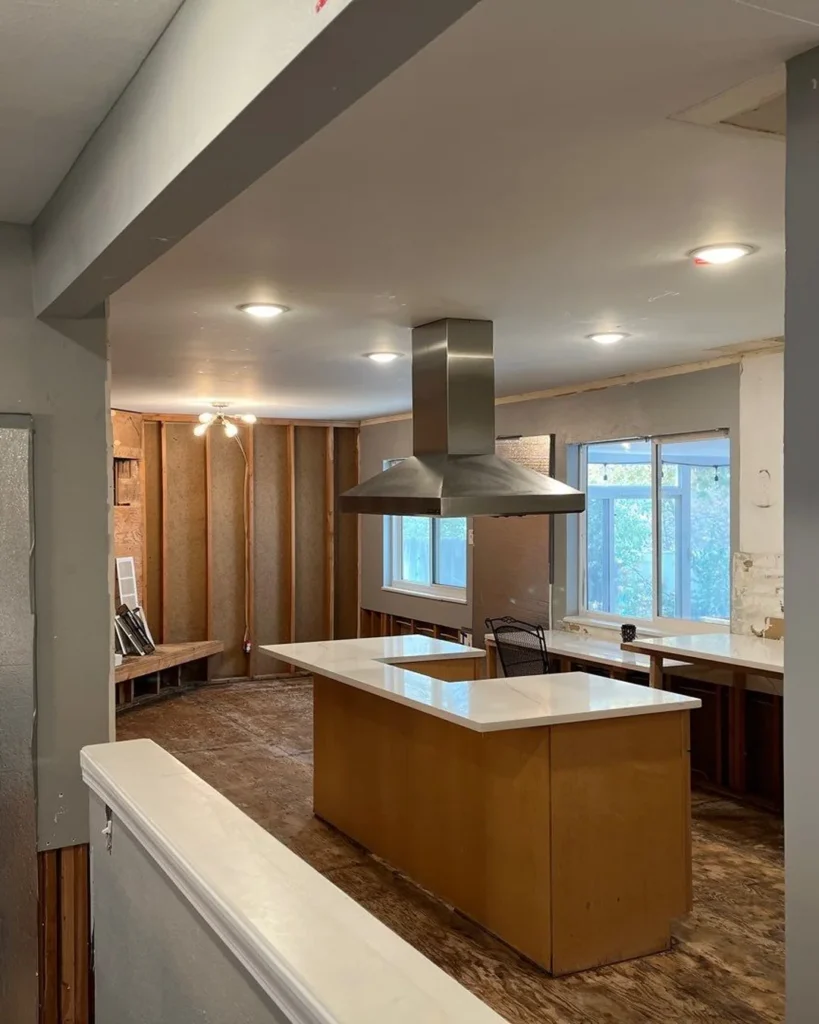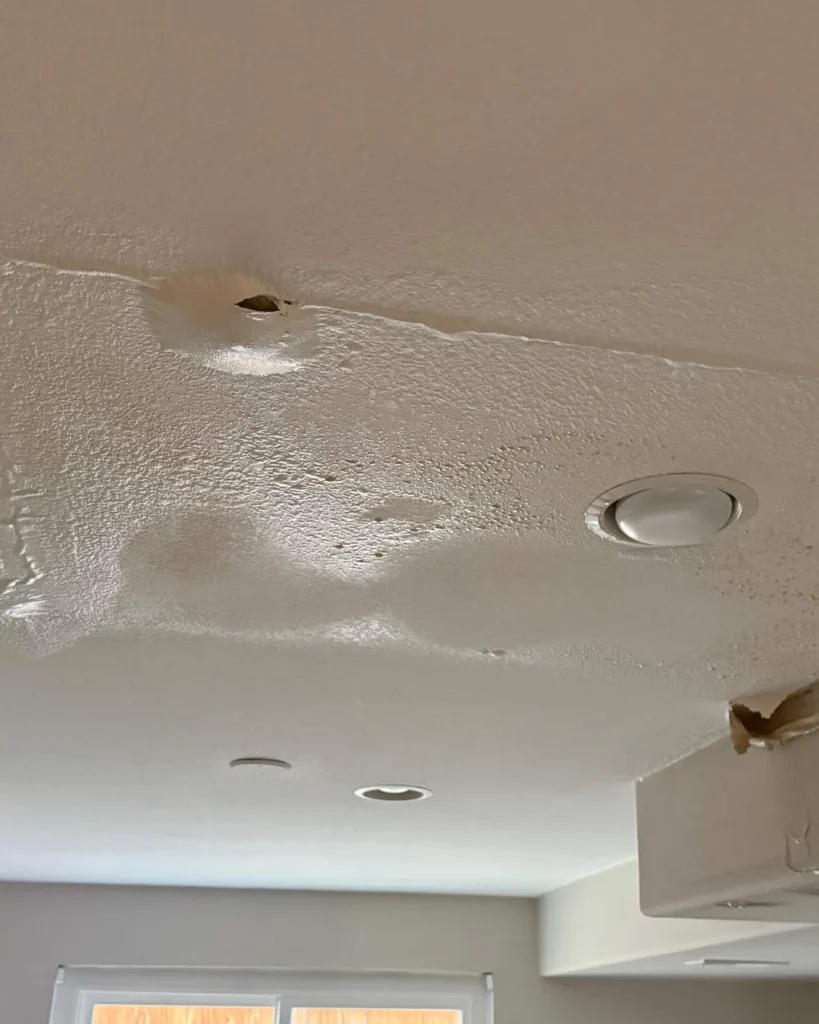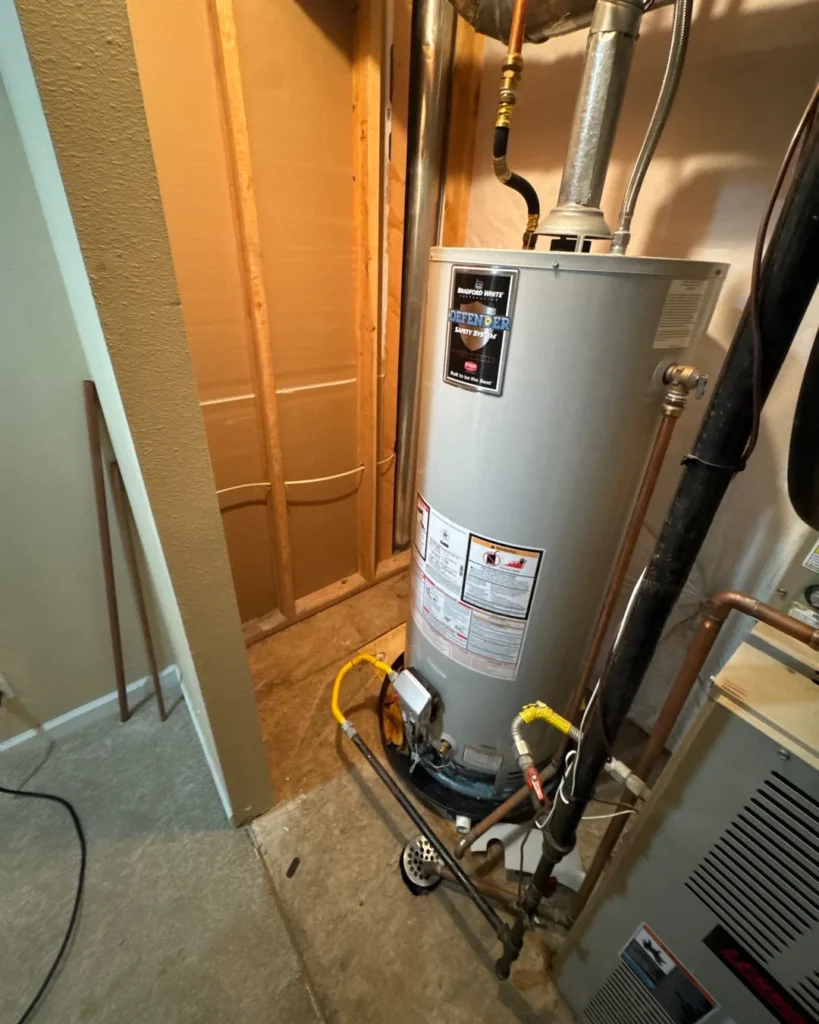
It would be nice if water heaters gave a warning before they failed and flooded your basement, but they don’t. Usually you find out from a shower that won’t warm up. Now you have a water heater to replace, damage to fix in the basement, and to top it off, you started the day with a cold shower.
A failed water heater can present different challenges when it floods a basement. If the basement is unfinished, it is often something that can be cleaned up and dried quickly or even on its own.
If the basement is finished, water can seep into the carpet pad, get beneath the flooring, absorb into the drywall, or affect the insulation. A failed water heater can also bring on mold faster than you’d expect, because a tank’s worth of hot water in a confined space drives the humidity up.
What’s this going to cost?
The questions stack up quick. What do I need to do to get this fixed? How far did the water go? What’s ruined? And the one everybody gets to: what’s this going to cost?
Every situation is different, but for a starting point, a small mitigation project in an unfinished basement might be around $750, if it’s even necessary. The best way to find out is to give us a call or have us come look at it with one of our free damage assessments. It’s often the case that a failed water heater and unfinished basement doesn’t need any help from us.
In a finished basement, that small project might cost $1,000 to $3,000, assuming the structure isn’t heavily affected. Perhaps just some drywall, baseboards, and carpet or tile.
The flooring is usually the biggest variable in all of this. LVP, for example, that gets damaged when a water heater fails, can impact the price. If the flooring is somewhat old and a match can’t be found, or you don’t have additional LVP to replace the damaged flooring, the conversation turns to whether the whole floor gets replaced.
Where all that water goes
A failed tank doesn’t always spray. It dumps its contents on the floor and spreads out. It can slip underneath drywall, be absorbed into the carpet pad, get underneath LVP flooring, and so on. If the water heater is in the middle of the floor plan, it’s important to look for impacted materials in every direction around it.
It’s a little different than your typical waterline break because, while it’s a significant amount of water, it’s dropped all at once and then usually stops. The water spreads out further and faster, but then it’s over. There’s a longer version of how basement water travels in water damage in your basement.
How do we get life back to normal?
There’s the water that spilled to address, there’s potentially repairing any damage to your property, and then, of course, there’s the water heater to replace. These are three separate things.
Unfortunately, you are going to need to either replace the water heater yourself or hire someone to do it. That is not something our industry typically handles. However, we do know a number of reputable plumbers and are more than happy to make a referral when necessary.
When we come out for either a free damage assessment or to get to work, we can tell you at that point the full scope of the job. This would include what can be dried and saved, and what potentially would need replacement or repair.
Often, if we respond quickly enough, we can save wet drywall when it doesn’t have insulation behind it. Sometimes the carpet pad can be saved, and most often the carpet itself is fine after it dries.
So do I need to find a contractor for the rebuild?
We can handle both the drying and the reconstruction if you’d like. However, you don’t have to use us for both if you don’t want to.
Sometimes property owners can handle the repairs themselves. This can be especially useful if you’re trying to avoid an insurance claim and want to keep costs down. In that situation, we’re still happy to point out what should be addressed.
There is also a chance that repairs aren’t needed at all. Plenty of losses dry in place and need very little put back. Whether a rebuild is part of yours is one of the first things we can tell you, often from photos alone.
Check the date on the tank
To stay proactive, check the manufacturing date of your tank. If it’s getting old, have it inspected and consider replacing it early. Newer water heaters are more energy efficient and will likely provide more hot water for those long showers anyway.
You can also install a water detector or sensor near the water heater. A sensor can’t stop a failure that releases all the water, but it tells you right away, which is often the difference between a wet floor and mold in the walls.
What to do right now if your water heater flooded
Of course, get any of your belongings that may have gotten impacted out of the way if you can. Additionally, if you’re up to it, you can always begin to clean up the water.
If it looks like something more than you’re wanting or willing to handle, give us a call any time, day or night, and we’re happy to talk through it with you.
While it’s likely a covered loss, we always recommend that before filing a claim, you have a damage assessment done so you can get a sense of the scope and the costs involved, to make sure that filing a claim is ultimately the best decision for you.
Call (303) 660-6216 any time. Colorado Springs is (719) 922-6448.
Key Takeaways
- A water heater typically doesn’t drip. It empties its tank all at once, and then it’s usually over.
- The water leaves at floor level and spreads in every direction, so it gets under flooring and behind drywall before you can see it.
- An unfinished basement often needs little or nothing. A small job there runs around $750, and plenty of them don’t need us at all.
- In a finished basement, a small mitigation project usually runs $1,000 to $3,000, and the flooring is the biggest variable in that number.
- There are three separate things to deal with: the water, the repairs, and the heater itself. We handle the first two and can refer you to a plumber for the third.
- You don’t have to line up a separate contractor for the rebuild, and you don’t have to use us for it either.
- Check the manufacturing date on the tank, and consider putting a leak sensor next to it.
- Get a damage assessment before you decide whether to file a claim. Not every one of these is worth filing.
Frequently Asked Questions
Not necessarily. A water heater is a clean water source, the same as the tap, and in a Category 1 loss like that the pad doesn’t automatically have to come out. What it does do is move water beyond what you can see on the carpet, which is why we look under it rather than guess. A pet barrier pad is the exception, since it holds water against the subfloor.
Both, and they can happen at the same time. Replacing the heater and dealing with the water are separate jobs and neither one has to wait on the other. Restoration companies typically don’t do the plumbing, but we have plumbers we’ve worked with for years that we’re happy to recommend or coordinate. More on that split in pipe burst in your house.
Two things decide it: what the material is, and whether the water got inside a closed cavity. Cement and hard surfaces come back fast. Framing, subfloor, and insulation behind drywall take longer, because the water is bound up in the material instead of sitting on it. Once we’ve measured it we can give you a date.
The slow version is the one that sneaks up on people. A tank that lets go all at once is at least obvious. One that’s been weeping at a fitting for weeks leaves no puddle you’d notice, and the first sign is a floor starting to buckle or a musty smell near the utility room. A heater that’s damp at the base is worth a look now rather than after it fails.